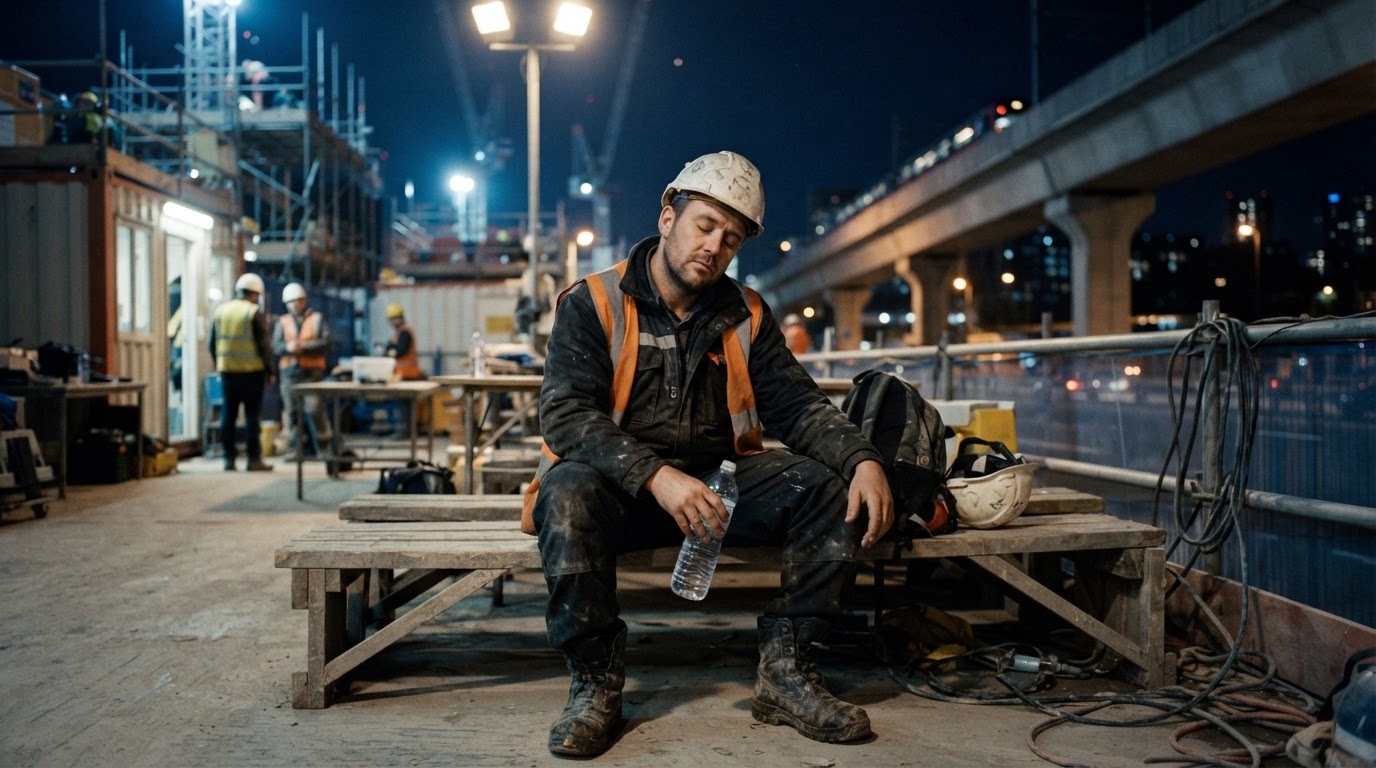

“Sleep is that golden chain that ties health and our bodies together.”
Thomas Dekker
On every construction site I have worked on, there are hazards everyone can see. Open edges. Moving plant. Suspended loads. Live electrical systems. We identify them, assess them and control them with barriers, procedures and protective equipment.
Then there are hazards that are much harder to see. One of the most common, and most underestimated, is fatigue.
Fatigue does not have warning signs or barriers. It walks onto site inside the people doing the work. It travels with the driver on the early morning commute. It sits in the control room during the night shift. It follows the manager into a critical meeting after a week of four-hour nights.
Safety science has a great deal to teach us about fatigue, and the lessons apply far beyond construction sites. Whether you work in an office, a hospital, a classroom or at home caring for others, understanding fatigue can protect your health, your performance and the people around you.
What Fatigue Really Is
Fatigue is more than feeling tired. It is a state of reduced mental and physical capacity caused by lack of sleep, extended periods awake, demanding work, disrupted body clocks or prolonged stress. It affects how we think, react and make decisions.
The UK Health and Safety Executive describes fatigue as a significant factor in many workplace incidents, particularly in shift work, transport and safety-critical industries. It notes that fatigue results in slower reactions, reduced ability to process information, memory lapses, absent-mindedness and increased risk-taking.
Crucially, fatigued people are often poor judges of their own impairment. We tend to believe we are coping better than we are.
Tired Is Like Impaired
One of the most striking pieces of research on fatigue was published in the journal Nature in 1997 by Drew Dawson and Kathryn Reid. They compared the effects of staying awake with the effects of alcohol on performance.
They found that after around 17 hours without sleep, performance on tasks requiring hand–eye coordination was similar to that of someone with a blood alcohol concentration of 0.05 per cent. After about 24 hours awake, performance was similar to a blood alcohol concentration of 0.1 per cent, which is above the legal driving limit in many countries.
Think about that for a moment. Someone who wakes at 5 a.m. and is still working at 10 p.m. may be performing like someone who has been drinking. We would never allow an intoxicated person to operate a crane, drive a vehicle or make a critical decision. Yet we often praise people for working exhausting hours.
Where Fatigue Comes From
Fatigue rarely has a single cause. More often, it builds from several sources at once.
Not enough sleep. Most adults need around seven to nine hours of sleep. Regularly getting less creates a “sleep debt” that accumulates over time.
Long hours. Extended shifts, overtime and long commutes reduce the time available for rest and recovery.
Night and rotating shifts. Working against the body’s natural clock disrupts sleep quality and alertness, especially in the early hours of the morning.
Heat and physical demands. In hot climates such as the Gulf, working in high temperatures adds to physical exhaustion and dehydration, both of which worsen fatigue.
Mental load and stress. Constant decision-making, emotional strain and worry drain energy just as surely as physical work.
Life outside work. Young children, caring responsibilities, financial worries and poor accommodation all affect how rested people are when they arrive at work.
How Safety-Critical Industries Manage Fatigue
Industries such as aviation, rail, mining and construction have developed practical approaches to fatigue that every organisation can learn from.
1. Plan work with rest in mind
Good fatigue management starts with the roster. Limiting shift lengths, ensuring adequate breaks between shifts, avoiding too many consecutive night shifts and scheduling high-risk tasks away from the low points of the body clock all reduce risk before anyone feels tired.
2. Treat fatigue as a reportable hazard
In strong safety cultures, a worker who says “I am too tired to do this safely” is thanked, not judged. Fatigue is treated like any other hazard: something to report and control, not something to hide.
3. Watch for the signs
Supervisors are trained to notice yawning, slowed reactions, irritability, poor concentration and repeated small mistakes. When they see these signs, they can adjust tasks, arrange breaks or reassign safety-critical work.
4. Manage heat and hydration
In hot climates, rest breaks in shaded or cooled areas, access to water and adjusted working hours are essential. The UAE’s summer midday work break for outdoor workers is one example of a measure that protects people from the combined effects of heat and fatigue.
5. Consider the commute
Many fatigue-related incidents happen not at work but on the journey home after a long shift. Organised transport, rest facilities and limits on driving after extended hours all reduce this risk.
Fatigue Beyond the Construction Site
Office workers rarely operate heavy machinery, but fatigue still affects them. A tired manager makes poorer decisions, communicates less patiently and is more likely to overlook important details. A tired analyst makes more errors. A tired team becomes more irritable and less creative.
The “always-on” culture of emails and messages late into the night has made it harder for many professionals to rest properly. The cost often goes unnoticed because it does not cause dramatic incidents. Instead, it shows up as slower work, strained relationships and gradual burnout.
What You Can Do Personally
- Protect your sleep. Aim for consistent sleep and wake times, even on weekends where possible.
- Create a wind-down routine. Reduce screen time and bright light in the hour before bed.
- Watch caffeine and heavy meals late in the day. Both can disrupt sleep quality.
- Take real breaks. Step away from your desk or work area, even briefly.
- Stay hydrated and move regularly. Dehydration and long periods of sitting both increase tiredness.
- Be honest. If you are too tired to do something safely or well, say so.
- Seek help if tiredness persists. Ongoing fatigue despite adequate rest can have medical causes worth discussing with a doctor.
What Leaders Can Do
Leaders shape fatigue risk through the expectations they set. Praising people for working through the night sends a message. So does sending emails at midnight. So does respecting rest days, planning workloads realistically and stepping in when someone is clearly exhausted.
The most effective leaders treat rest as part of performance, not the opposite of it. They understand that a well-rested team is safer, sharper and more productive than an exhausted one.
Rest Is Not a Reward
Many of us treat rest as something we earn once the work is done. But the work is never truly done. If we wait for the perfect moment to rest, it will never come.
Safety science offers a different view. Rest is not a reward. It is a control measure. It protects us from mistakes, injuries and long-term harm, just as a guardrail protects us from a fall.
So the next time you feel guilty for stopping, remember: a rested person is not a less committed person. They are a safer and more capable one.
Reflection Question
If fatigue were listed on your personal risk register, how would you rate it right now, and what is one control measure you could put in place this week?
Related reading
Sources and further reading
- Drew Dawson and Kathryn Reid, “Fatigue, alcohol and performance impairment”, Nature, Vol. 388, p. 235 (1997).
- UK Health and Safety Executive, Human factors: Fatigue.
By: G.K. Ezekiel Werimo
Leave a Reply